🛸 Elica Project: Blog Support & Charity
Every contribution on Ko-fi is split 50/50: half supports the site and half goes to charity (currently to UNICEF). Check the payment proofs on our Transparent Donations page.
Visual note: many of the images on this blog are generated or edited using AI.
Choose Your Path! Click to expand the table of contents.
Table of Contents
Preface
(Neo Geo 1991-2004)
Back in 1996, I used to spend countless hours at the arcade playing Street Fighter II, Mortal Kombat II, Cadillacs and Dinosaurs, and Tekken. I played wherever there was a cabinet: at the local youth center bar, the spot up on the hill, the bowling alley near the shopping mall, and the sports complex bar.
Then came the first cabinet of The King of Fighters ’94 straight from Japan: a 3-on-3 fighting game running on **Neo Geo** hardware, complete with an unforgettable 16-bit intro.
That was the exact moment my passion for the **SNK** brand was born. I was really young back then, tokens were super cheap, and adults would often hand me handfuls of them (what a time!). I still remember getting wrecked repeatedly by Team Brazil: I played as Team Mexico or Team Korea, but Heidern would always destroy me!
Even though I kept getting beaten, the sheer thrill of playing was indescribable. Over the years, I went on to discover incredible Neo Geo gems, from iconic fighting games to hidden arcade classics. So here are 10 fantastic Neo Geo games packed with pure nostalgia!
10. Double Dragon

Genre: 2D 1v1 Fighting Game
Release Date: March 31, 1995
Publisher: SNK
Developer: Technos Japan
A fantastic game for its era, not to be confused with the iconic 1987 side-scrolling beat ’em up created by the same developers.
The selectable fighters draw heavily from that universe: I often played as Cheng Fu, a master of the Drunken Fist style, as well as the two iconic protagonists Billy and Jimmy. Their defining feature? They could transform and power up almost like Super Saiyans, complete with a spectacular rainbow aura blast!

The roster features 10 playable characters plus 2 boss opponents. The special moves were extremely powerful and remarkably plentiful for the time (roughly 2 or 3 Supers per fighter), triggerable especially when low on health via a “Charge Gauge” overlaid directly onto the health bar.
- Playable Fighters: Billy Lee, Jimmy Lee, Marian, Abobo, Burnov, Eddie, Amon, Cheng Fu, Dulton, Rebecca.
- Sub-Boss: Duke
- Final Boss: Koga Shuko
And let’s be honest: I think Abobo is one of the most aesthetically hideous characters of all time when he inflates out of proportion!
💥🕹️ 𝓓𝓮𝓼𝓽𝓻𝓸𝔂 𝓽𝓱𝓮 𝓐𝓻𝓬𝓪𝓭𝓮 𝓢𝓽𝓲𝓬𝓴 🕹️💥
Who needs the gym? Just do like Abobo and INFLATE!
9. Aero Fighters 2 (Sonic Wings 2)
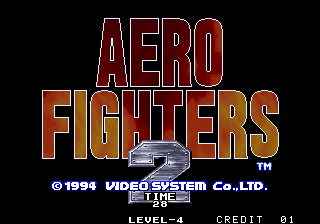
Genre: Vertical Scrolling Shooter / Shoot ’em up
Release Date: August 26, 1994
Publisher: Video System / SNK
Developer: Video System
An aerial combat game packed with references and anime flair that was brutally tough for me back then: I’d reach the second or third stage only to blow up horribly. And guess who I always picked? Whitty, the talking dolphin. Why? Because he was unequivocally the coolest of the bunch, end of story!
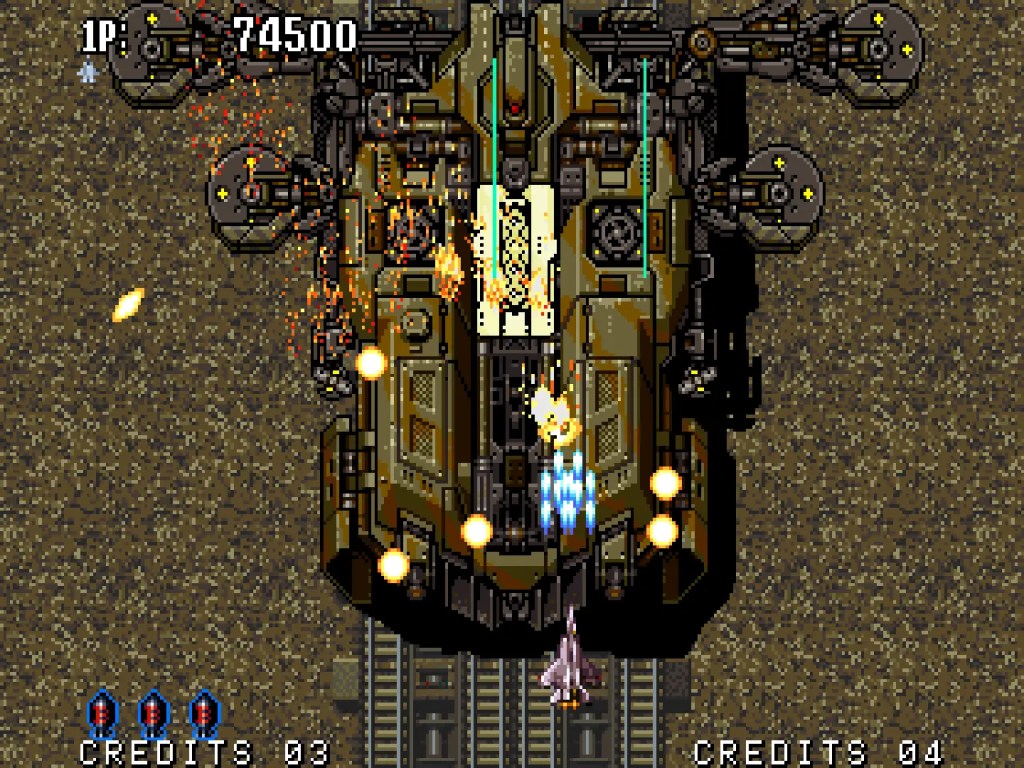
The pilot and aircraft roster of Aero Fighters 2 (Sonic Wings 2) features 8 playable characters split by nation/faction, each with their own unique fighter jet:
- United States: Steve (F-15 Eagle), Keaton (F-117 Nighthawk)
- Japan: Hien (FS-X), Mao Mao (AV-8 Harrier II)
- France: Spanky (Rafale M), Ellen & Cincia (AJ-37 Viggen)
- United Nations (UK / Africa): Whitty (Gloster Meteor), Kowful & Tee-Bee (YF-23 Spider)
The classic arcade mechanics centered around collecting power-ups to upgrade your main attack and dropping devastating specials (the iconic screen-clearing bombs) worked like a charm, remaining a winning formula even in more modern shmups. Oh, the tears shed in front of that cabinet!
💥🕹️ 𝓓𝓮𝓼𝓽𝓻𝓸𝔂 𝓽𝓱𝓮 𝓐𝓻𝓬𝓪𝓭𝓮 𝓢𝓽𝓲𝓬𝓴 🕹️💥
How does a Dolphin fly a fighter jet? Because he’s a superior being!
8. Windjammers (Flying Power Disc)

Genre: Sports / Arcade
Release Date: February 17, 1994
Publisher: Data East / SNK
Developer: Data East
Would you ever have thought that such an over-the-top concept—an explosive mix of tennis and frisbee—could work so flawlessly? Well, it did! Windjammers features a compact roster of just 6 athletes of various nationalities, going head-to-head to score goals against each other.
Yet its real magic lies in the breathtaking super shots and tight character balancing: each competitor has unique stats, ranging from lightning speed demons to pure powerhouses and all-rounders.
The scoring system is straightforward yet devilish:
- 5 Points: Hitting the side zones of the opponent’s goal (the red “hot” spots).
- 3 Points: Hitting the center yellow goal area.
- 2 Points: If the opponent fails to catch the frisbee and it hits the sand/court on their side (the classic lob shot).
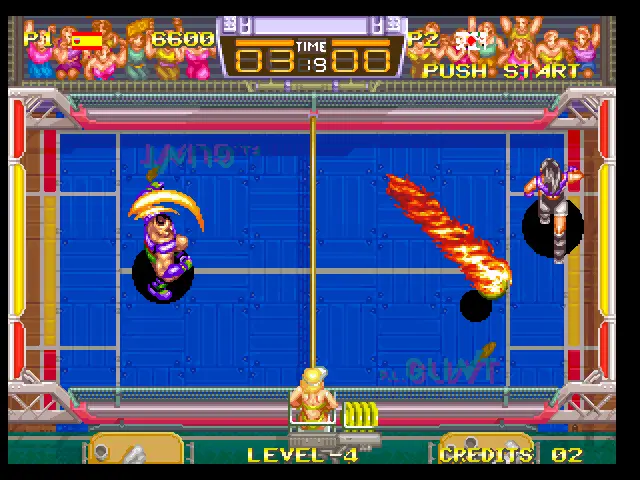
The difficulty in this game is quite brutal, whether against the CPU or in 1v1 multiplayer matches. I often picked the Italian, the Spaniard, and the American (sounds like the setup for a joke, I know!). Here is the roster of the 6 athletes:
- 🇺🇸 Gary Scott (USA) – Extremely powerful but slow.
- 🇯🇵 Hiromi Mita (Japan) – Blazing fast but light.
- 🇮🇹 Loris Biaggi (Italy) – A well-balanced all-rounder.
- 🇪🇸 Jordi Costa (Spain) – A solid mix of power and decent speed.
- 🇬🇧 Steve Miller (United Kingdom) – Agile and skilled with curve shots.
- 🇩🇪 Klaus Wessel (Germany) – The heaviest and most powerful on the roster.
Forever legendary will be the beach bonus stage, where you have to dash through obstacle courses controlling a cute dog chasing after a frisbee to catch it mid-air at insane distances!
💥🕹️ 𝓓𝓮𝓼𝓽𝓻𝓸𝔂 𝓽𝓱𝓮 𝓐𝓻𝓬𝓪𝓭𝓮 𝓢𝓽𝓲𝓬𝓴 🕹️💥
Vortex Shot!
7. Metal Slug X
Genre: Run and Gun / 2D Side-Scrolling Shooter
Release Date: March 19, 1999
Publisher: SNK
Developer: SNK
Let’s be honest: for millennials like me, even the rocks know what Metal Slug is—the most famous 2D shooter in the West and across the four winds. Personally, back in the arcades, X was the exact version I played.
And oh, the amount of money wasted on tokens trying to beat this bullet hell! My skills in this game, unfortunately, have always been pretty limited. In this entry, you could choose from 4 characters with identical stats, but with distinctly different looks and outfits.
I often picked the blonde protagonist Marco Rossi (yes, Italian!), a charismatic officer, or Tarma Roving, a skilled pilot and mechanic sporting his signature sunglasses. Then there was Eri Kasamoto, a special forces agent and explosives expert, and the wealthy Fiolina Germi who, in the lore, boasts flawless marksmanship.
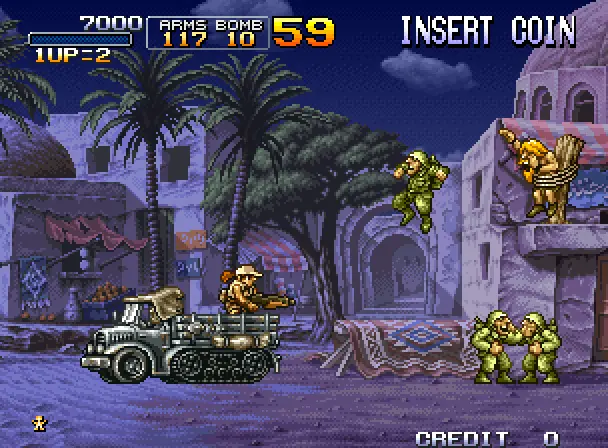
The narrator’s voice, provided by American voice actor John Hulaton, is the absolute stuff of legend: whenever you picked up a power-up, his delivery was fantastic, featuring iconic lines like “Heavy Machine Gun!” or “Rocket Launcher!”.
The defining feature of this intensely arcade title is the highly destructible environments, packed with tons of hidden secrets. At its core, the game is all about blasting enemy soldiers, mechanical monsters, and various aliens using a vast arsenal of deadly weapons, power-ups, and vehicles, while rescuing prisoners for rewards and completing stages to score high records.
Packed with character caricatures referencing 80s and 90s action movies alongside cult Easter eggs (like the prisoner who looks like he watched way too much Dragon Ball, throwing energy waves), it remains a true milestone of the genre.
💥🕹️ 𝓓𝓮𝓼𝓽𝓻𝓸𝔂 𝓽𝓱𝓮 𝓐𝓻𝓬𝓪𝓭𝓮 𝓢𝓽𝓲𝓬𝓴 🕹️💥
Tarma: «Marco Rossi, you’re eating way too much!»
Marco Rossi: «Don’t worry, it’s all part of my anti-tank diet!» 🍞💥
6. The King of Fighters 94
Genre: 2D Fighting Game
Release Date: August 25, 1994
Publisher: SNK
Developer: SNK
This probably remains the greatest rival to Street Fighter II of all time. An insane game for its era: an elimination-style 3-on-3 fighting game featuring teams representing various nations across the globe.
A mysterious tycoon sends a letter of invitation to the planet’s finest fighters to determine who is truly the strongest. Thus begins a ruthless tournament at the heart of a title known for its punishing difficulty.
Among the core mechanics, the Power Gauge at the bottom stands out, which you can charge manually mid-fight: once fully filled, you temporarily enter MAX Mode, dealing increased damage with normal attacks, or you can expend it completely to perform your Super Special Move. Furthermore, when your health is critically low and the life bar flashes red, you gain unlimited Super Moves… assuming you manage to stay alive!
Instead of the classic rolls (introduced only in later entries), here you perform a stationary dodge with precise timing. Victory requires a deep understanding of opponent attack timings and mastering every character’s move set.
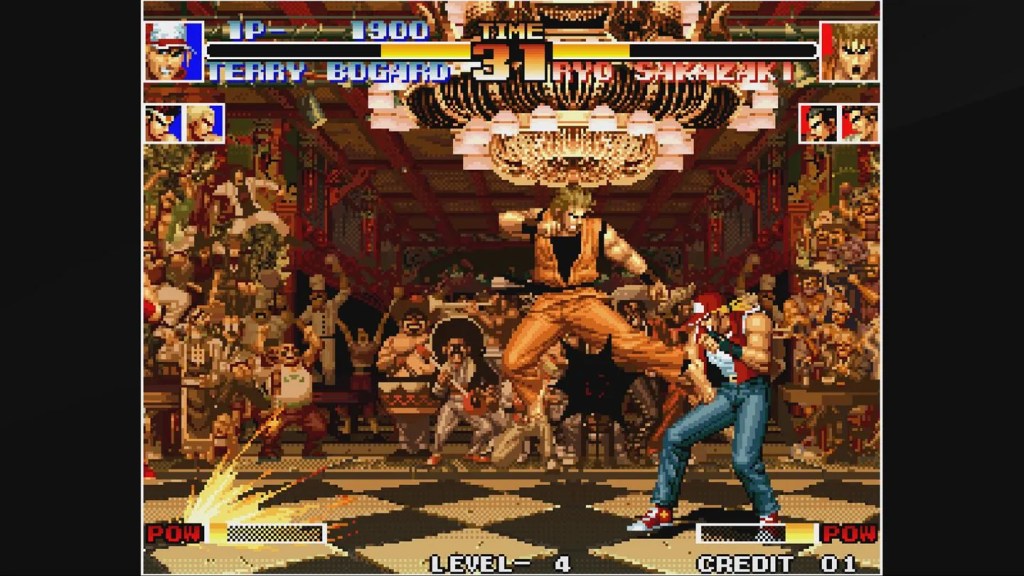
The roster of The King of Fighters ’94 features 24 playable characters divided into 8 teams representing different countries, plus the iconic final boss:
- Team Japan (Hero Team): Kyo Kusanagi, Benimaru Nikaido, Goro Daimon
- Team Italy (Fatal Fury Team): Terry Bogard, Andy Bogard, Joe Higashi
- Team Mexico (Art of Fighting Team): Ryo Sakazaki, Robert Garcia, Takuma Sakazaki
- Team Brazil (Ikari Team): Ralf Jones, Clark Still, Heidern
- Team China (Psycho Soldier Team): Athena Asamiya, Sie Kensou, Chin Gentsai
- Team England (Women Fighters Team): Yuri Sakazaki, Mai Shiranui, King
- Team South Korea (Kim Team): Kim Kaphwan, Chang Koehan, Choi Bunge
- Team USA (Sports Team): Heavy D!, Lucky Glauber, Brian Battler
- Final Boss (Unplayable): Rugal Bernstein
Several tracks from this game’s OST remain legendary, particularly “Esaka” for Team Japan, “Ryuuko no Ken” at Pao Pao Café for Team Mexico, and “Jungle Bounce” for Team Brazil. Much of the soundtrack features dark tones, and the voice actors’ work on sound effects and voice samples was truly top-tier for its time.
Finally, Rugal remains one of the most absurdly cheap boss fights on default arcade difficulty: his Phase 2, when he rips off his shirt to show you he’s getting serious, is pure nightmare fuel for any player!
💥🕹️ 𝓓𝓮𝓼𝓽𝓻𝓸𝔂 𝓽𝓱𝓮 𝓐𝓻𝓬𝓪𝓭𝓮 𝓢𝓽𝓲𝓬𝓴 🕹️💥
Haoh Shoukou Ken! Gwooo! Kuraeyagare!
5. Neo Turf Masters

Genre: Sports / Arcade Golf
Release Date: January 29, 1996
Publisher: SNK
Developer: Nazca Corporation
An arcade golf game capable of being this entertaining? I don’t think there are many out there. This title is an absolute blast, especially when playing head-to-head against a friend.
The game’s strength lies in its instant accessibility and the quick reflexes required to aim on various greens and sink the ball, all while accounting for wind speed and direction (headwind or tailwind). You can also select different irons depending on distance and apply the desired spin to your shot.

The roster of Neo Turf Masters features 6 selectable golfers, each defined by distinct stats and playstyles:
- George Spinner (United States) – Young Hero: Balanced and versatile, perfect for beginners.
- Thomas Stewart (United Kingdom) – Veteran: A high-control player with exceptional putting skills.
- Frank Almend (Australia) – Shot Maker: A specialist in ball control and high-spin/recovery shots.
- Robert Landolt (Germany) – Power Golfer: The distance specialist, boasting the maximum shot power in the game.
- Fernando Almeida (Brazil) – Speed Golfer: Combines an ultra-fast shot routine with great accuracy on short courses.
- Toyosige Takeno (Japan) – Golf Master: High precision and pure technical skill, ideal for complex courses.
(”Personally, I played as the German golfer a lot”)
The gameplay revolves around conquering various stages across increasingly tricky courses in as few strokes as possible. And the announcer’s voice is legendary, still ringing in my head with her iconic line: “On the Green!”.
💥🕹️ 𝓓𝓮𝓼𝓽𝓻𝓸𝔂 𝓽𝓱𝓮 𝓐𝓻𝓬𝓪𝓭𝓮 𝓢𝓽𝓲𝓬𝓴 🕹️💥
Bingo! On The Green! In the Hole! Water Hazard! Out of Bounds!
4. Samurai Shodown IV: Amakusa’s Revenge
Genre: 2D Weapon-Based Fighting Game
Release Date: October 25, 1996
Publisher: SNK
Developer: SNK
Widely considered one of the franchise’s Big Three alongside the classic Samurai Shodown II and the modern Samurai Shodown V Special, this fourth entry is an absolute masterpiece. Set in the winter of 1789 (the Kansei era of Japan’s Tokugawa period), the story revolves around the return of the evil sorcerer Shiro Tokisada Amakusa and the appearance of a sinister castle on Shimabara Island.
It is here that Zankuro Minazuki, a terrifying warrior known as “Oni,” is resurrected, sparking a bloodthirsty struggle to the death among samurai, ninja, and fighters of all kinds.
The game is remarkably gory, unforgiving, and deeply technical to master. Landing a clean heavy slash on an opponent with an empty health bar can slice them in half or leave them bleeding out. Furthermore, dominating the match grants you the ability to execute a “No Contest” finisher, very much in the vein of Mortal Kombat‘s Fatalities.
The classic POW gauge returns, crucial for unleashing devastating Super moves: attack power in this entry is downright brutal, where 3 or 4 well-placed heavy hits are enough to seal a round. Every fighter retains unique special moves and playstyles. My personal favorite was always Galford, the American ninja who commands lightning arts and fights alongside his faithful husky, Poppy.

The roster of Samurai Shodown IV: Amakusa’s Revenge features 17 selectable fighters (each with dual playstyle variations, Slash / Shura and Bust / Rasetsu, altering their movesets and tactical approach), plus the terrifying final boss:
- Playable Fighters: Haohmaru, Nakoruru, Ukyo Tachibana, Hanzo Hattori, Galford, Genjuro Kibagami, Shizumaru Hisame, Rimururu, Gaira Caffeine, Basara, Kyoshiro Senryo, Jubei Yagyu, Charlotte, Tam Tam, Kazuki Kazama, Sogetsu Kazama, Shiro Tokisada Amakusa
- Final Boss: Zankuro Minazuki
| Feature | Slash Mode (Shura) ⚔️ | Bust Mode (Rasetsu) 🔥 |
|---|---|---|
| Philosophy | Standard, virtuous, and balanced playstyle. | Dark, rebellious, and heavily aggressive playstyle. |
| Moveset | Features the character’s classic and signature moves. | Replaces select moves with more aggressive or close-range variations. |
| Rage Usage | Focused on counter-attacks and spacing control. | Often features moves that consume the POW gauge to deal massive damage. |
Haohmaru, who has always been the series’ iconic protagonist, served as the direct inspiration for the famous (and often loathed) Yasuo in League of Legends. Indeed, he is a samurai who summons tornadoes and gusts of wind to accompany his devastating blade strikes.
💥🕹️ 𝓓𝓮𝓼𝓽𝓻𝓸𝔂 𝓽𝓱𝓮 𝓐𝓻𝓬𝓪𝓭𝓮 𝓢𝓽𝓲𝓬𝓴 🕹️💥
Galford: «Hey Poppy! Hey Poppy!»
Poppy: «Fuckuuuuuuuuuhhh!» 🐶⚡
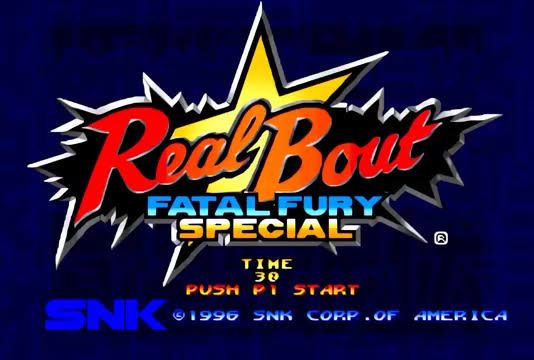
3. Real Bout Fatal Fury Special
Genre: 2D Fighting Game
Release Date: January 28, 1997
Publisher: SNK
Developer: SNK
One day, I walked into a café with an arcade room and found myself in front of this massive CRT screen: a huge, comfortable cabinet with instruction stickers placed near the buttons and joystick showing all the characters’ super moves. I grabbed three tokens and started playing right away.
It had a simply gorgeous anime-style graphical look. But who to pick? Naturally, a short kid with spiky blue hair brushed upward, firing energy waves left and right.
After my first few matches, an adult walked up and handed me twenty tokens all at once! That’s how I ended up playing that exact cabinet in that café for a whole year, until the owner decided to swap it out.
Back then, Real Bout Fatal Fury Special felt like something extraordinary to me. You had access to tons of combos, special moves, and two distinct super finishers per character, powered by the **S-Power** and **P-Power** gauges (which dealt insane damage!). On top of that, you could shift between background and foreground planes to dodge attacks and catch your opponent off guard.
When the gauge was filled at least halfway and turned yellow, you could even perform “Guard Cancels”—special counter-attacks executed immediately after blocking an enemy strike.

Even though it was a sort of “dream match” spin-off of the Fatal Fury saga (at the time, I knew absolutely nothing about that), this fifth entry was a truly excellent title. To please the fans, SNK decided to “resurrect” a ton of characters who had disappeared or passed away in previous installments, hitting a total home run.
The roster of Real Bout Fatal Fury Special boasts a total of 19 selectable fighters, alongside secret versions and iconic bosses:
- Iconic Veterans: Terry Bogard, Andy Bogard, Joe Higashi, Mai Shiranui, Kim Kaphwan, Duck King, Billy Kane, and Wolfgang Krauser.
- Series Staples: Blue Mary, Ryuji Yamazaki, Jin Chonshu, Jin Chonrei, Franco Bash, Bob Wilson, Hon Fu, Sokaku Mochizuki, Tung Fu Rue, Cheng Sinzan, and Laurence Blood.
- Bosses & Secrets: Geese Howard (unlockable) and the infernal Nightmare Geese.
- EX Characters: Alternate versions with modified movesets for Andy, Tung Fu Rue, Billy Kane, and Blue Mary.
Finally, the audio presentation was something that thrilled me deeply, especially thanks to the top-notch voice acting and the explosive energy of the announcer. It’s also worth highlighting the famous voice actor Kappei Yamaguchi, well-known for voicing Ranma Saotome (in his male form).
💥🕹️ 𝓓𝓮𝓼𝓽𝓻𝓸𝔂 𝓽𝓱𝓮 𝓐𝓻𝓬𝓪𝓭𝓮 𝓢𝓽𝓲𝓬𝓴 🕹️💥
Duck King: «Hey Joe, you’ve got zero sense of fashion!»
Joe Higashi: «Look who’s talking—a guy rocking a mohawk with a chick on his head! My Muay Thai shorts are pure style!»
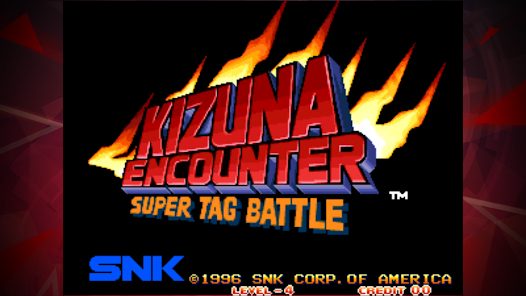
2. Kizuna Encounter: Super Tag Battle
Genre: 2D Tag Team / Weapon-Based Fighting Game
Release Date: September 20, 1996
Publisher: SNK
Developer: SNK
Out of all the fighting games in this article, it might not be the absolute best graphically, but it holds a truly special place in my heart. I played it relentlessly at the local youth center, both solo and taking on all comers.
I still remember the left coin slot was faulty: inserting one token gave you two credits! For its time, the gameplay speed and fluidity were off the charts, featuring quirky, insanely powerful characters, vibrant anime-style visuals, and above all, a fantastic tag-team battle system.
Between wild special moves—like old Chung Paifu’s little magic cloud that turned you into a chicken, plus his boosted rage state when his health bar dropped into the red—and Joker the clown’s bizarre traps, this game is an absolute blast to play.

With a single button press, you can tag in your secondary character, managing a tag cooldown indicated by a small yellow gauge while your benched partner slowly regenerates health. When your health bar flashes red, you gain access to unlimited super finishers! There is even a dedicated tag combo that allows you to summon your partner from the corner for an instant assist attack.
The roster of Kizuna Encounter: Super Tag Battle features 10 selectable fighters alongside 2 ruthless final bosses:
- The Fighters: Sho Hayate, Rosa, Kim Sue-Il, Joker, Chung Paifu, Max Eagle, Carol Stanzack, Gordon Bowman, Gozu, and Mezu.
- The Final Bosses: King Lion (Shin Shishioh) and the shadowy threat Jyazu.
Using a specific button code on the select screen, you could even play as the secret boss characters!
💥🕹️ 𝓓𝓮𝓼𝓽𝓻𝓸𝔂 𝓽𝓱𝓮 𝓐𝓻𝓬𝓪𝓭𝓮 𝓢𝓽𝓲𝓬𝓴 🕹️💥
Hey Kim Kaphwan, did you head to a monastery or a cosplay shop to become Kim Young Monk?
1. Garou: Mark of the Wolves

Genre: 2D Fighting Game
Release Date: November 26, 1999
Publisher: SNK
Developer: SNK
What can be said about this title other than that it bordered on (and perhaps still borders on) absolute perfection in 2D fighting games? It is by far the fighting game I’ve poured the most hours into in my life, and one I still play on Steam today. It represents the ultimate synthesis of over a decade of mechanics masterfully refined by SNK.
This entry popularized mechanics like **Just Defend**, **Guard Cancels**, feints, and their corresponding **Feint Cancels** (see the explanatory table further below). The feint system draws heavily from Fatal Fury 3: Road to the Final Victory, while Just Defend is a direct evolution of the parry from Samurai Shodown II. The super move system, on the other hand, adopts the structure of Real Bout Fatal Fury Special, which I mentioned earlier.
The story is set in South Town, ten years after the fall of the terrifying crime lord Geese Howard at the hands of Terry Bogard. With the tyrant gone, South Town has finally found a period of peace. The legendary “Lone Wolf” Terry has raised **Rock Howard**—Geese’s young biological son—like an adopted child. The organization of a new martial arts tournament pushes Terry, Rock, and a brand-new generation of fighters to step into the ring to uncover what threat lies behind the event.
Rock Howard’s journey is the true emotional heart of the game: the young man fights under the weight of his lineage, torn between the affection and teachings of his mentor Terry and the looming shadow of his biological father. As the tournament unfolds, new faces tied to the city’s past and future emerge, leading to the climax where Kain R. Heinlein—the tournament organizer and Rock’s maternal uncle—reveals a shocking truth about his mother, forcing him to question his own destiny.

| Mechanic | Execution | Tactical Effect & Utility |
|---|---|---|
| Just Defend | Last-second block (press back just before impact). | Restores a fraction of health, resets guard meter wear, reduces hitstun, and enables Guard Cancels. |
| Guard Cancel | Executing a special/super move during a Just Defend. | Cancels block recovery and immediately delivers a counter-attack, punishing the opponent’s strike. |
| Feint | Dedicated command (e.g., Forward + A + B or Down + A + B). | Simulates the start of a special move to trick the opponent, baiting a block or throwing off their reaction timing. |
| Feint Cancel | Canceling a normal attack with a Feint. | Removes recovery frames from a connected hit, allowing you to extend combos and chain moves that would otherwise be impossible. |
The roster of Garou: Mark of the Wolves features 12 base playable fighters alongside 2 unlockable final bosses:
- The Fighters: Rock Howard, Terry Bogard, Futaba Hotaru, Gato, B. Jenet, Kim Dong Hwan, Kim Jae Hoon, Tizoc (The Griffon), Marco Rodriguez (Khushnood Butt), Hokutomaru, Kevin Rian, and Freeman.
- The Final Bosses: Grant and Kain R. Heinlein.
Many of the fighters in Garou: Mark of the Wolves are disciples, children, or relatives of legacy SNK characters (like Hokutomaru, a student of Andy Bogard and Mai Shiranui). The soundtrack is exceptional: special mention goes to “Spread the Wings”, Rock Howard’s stage theme clearly inspired by Robert Miles’ famous “Children”.
My personal favorites have always been Rock, Gato, and Kim Dong Hwan, though it’s genuinely hard to leave anyone else out. A fun bonus fact: lending her voice to Hokutomaru is none other than famous voice actress Junko Takeuchi, best known as the voice of Naruto!
💥🕹️ 𝓓𝓮𝓼𝓽𝓻𝓸𝔂 𝓽𝓱𝓮 𝓐𝓻𝓬𝓪𝓭𝓮 𝓢𝓽𝓲𝓬𝓴 🕹️💥
You’re facing a Taekwondo god, rookie!
In Conclusion
These are the 10 Neo Geo games I grew up with, gems from a bygone era that still hold a unique charm today. I hope you enjoyed this trip down memory lane and through gaming history!
Leave a Reply