🛸 Elica Project: Support the Blog & Charity
Every tip on Ko-fi is split 50/50: 50% supports the site and 50% is donated to charity (currently supporting UNICEF). Check public receipts on our Transparent Donations page.
Visual note: many of the images on this blog are generated or edited using AI.
Choose Your Path! Click to expand the table of contents.
Table of Contents
PREFACE
If you are part of the generation that came home from school, turned on the TV, and let broadcast television guide your afternoon (back when channels like Italia 1 and Rai 2 ruled the airwaves), then get ready for a nostalgic trip down memory lane. Before the advent of binge-watching, there was a golden age—at the turn of the late ’90s and early 2000s—when TV appointments were sacred.
Here are 5 tv series from that era that completely enchanted us, keeping us glued to our seats through laughs, fantasy thrills, and roundhouse kicks.
5. Friends (1994)
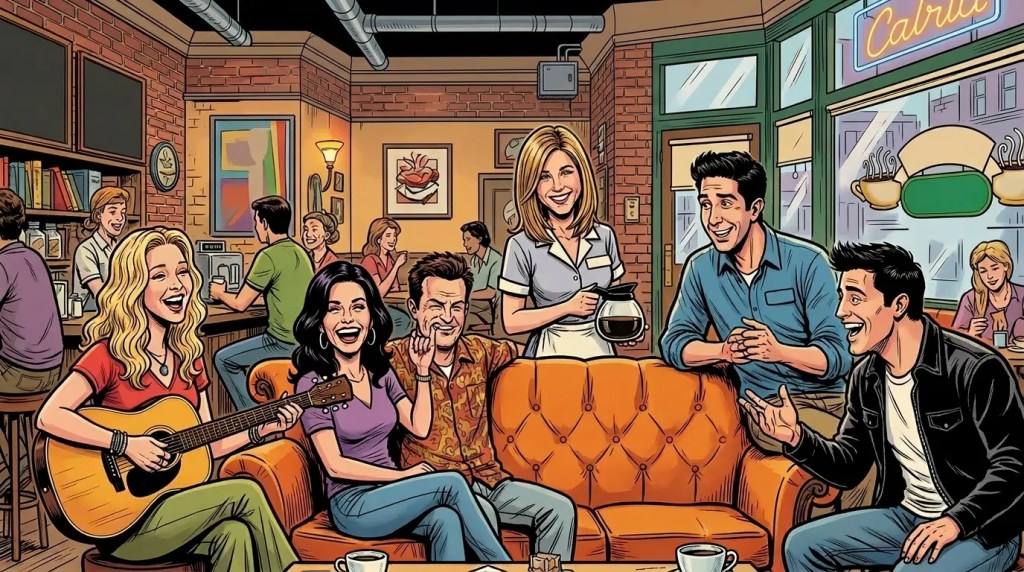
- Creators: David Crane, Marta Kauffman.
- Genre: Sitcom, Comedy.
- Where to watch: Netflix / Max (depending on the market).
- Plot Structure: Light Serialized + Episodic.
You can’t talk about the turn of the millennium without mentioning the mother of all modern sitcoms. Although it premiered in 1994, Friends reached its peak maturity and global popularity in the early 2000s, coming to an end in 2004 with an epic finale watched by 52 million viewers.
The show’s strength lies in its incredible relatability: the romantic dynamics between Ross and Rachel, Chandler’s sarcastic one-liners, Phoebe’s quirky eccentricities, Monica’s obsession with control, and Joey’s insatiable hunger. Six ordinary characters, enclosed between a purple-walled apartment and the iconic Central Perk couch, who became the best friends of anyone navigating the complexities of adulthood.
The winning formula isn’t always the most complicated
A disarmingly simple start: We are talking about Friends, the sitcom that redefined global pop culture starting from a disarmingly simple premise: six friends, an orange couch, and the everyday struggles of life in New York. No complex setups, just pure immediacy.
The essence of the “hangout comedy”: Indeed, the show’s winning formula relied entirely on the pure concept of the “hangout comedy” (comedy about just spending time together). While other productions tried to wow audiences with intricate episodic plots or continuous twists, Friends focused on building incredible chemistry between the six leads.
It was a flawless, clockwork mechanism where Monica’s neuroses, Chandler’s defensive sarcasm, Rachel’s flightiness, Phoebe’s quirkiness, Ross’s romantic bad luck, and Joey’s naivety clicked together perfectly, making the viewer feel like the “seventh friend” sitting at Central Perk.
From clichés to immortal catchphrases: The writers took the most classic and universal clichés of human relationships (career drama, roommate dynamics, the eternal “were we on a break or not?” dilemma) and turned them into lightning-fast jokes and catchphrases that entered everyday language.
There was no need for sky-high budgets: a desperate cry of “Pivot!” while moving a couch, a charming “How you doin’?”, or a wacky song about a smelly cat were more than enough to create immortal cult moments.
A timeless legacy: The true miracle of this narrative simplicity is its incredible longevity. Decades after its debut, Friends continues to rack up billions of streaming minutes across platforms, even winning over new generations born long after the final historic episode aired.
It is a clear demonstration that when the writing is genuine and the characters become a true extension of your own social circle, simplicity beats any complication.
The inseparable friends
But who exactly were the six members of this legendary group? Here is a quick refresher on the six inseparable friends:
Monica Geller: The chef obsessed with order, hyper-cleanliness, and fierce competition. Her purple-walled apartment serves as the group’s official headquarters. She is the “mother hen” of the crew—strict but with a huge heart, capable of cooking an entire Thanksgiving turkey just to make her friends happy.
Chandler Bing: The undisputed king of sarcasm and jokes used as a defense mechanism against social awkwardness. For years, nobody really understood what his job was (something to do with “data reconfiguration”) before he quit it all for advertising. His romantic evolution alongside Monica is one of the most beautiful subplots in television history.
Rachel Green: She begins her journey with a splash of adventure, fleeing her own wedding in a bridal gown to seek refuge with Monica. Starting as a spoiled girl dependent on her dad’s credit card, she undergoes the most massive character growth on the show, transforming into an independent mother and a respected businesswoman in the fashion industry (working for brands like Ralph Lauren).
Ross Geller: Monica’s older brother and a paleontologist madly in love with dinosaurs (and Rachel, since high school). An intellectual who is incredibly unlucky in love and a serial collector of disastrous divorces, Ross is the king of lovable bad luck. His nervous breakdowns (like his memorable meltdown over his stolen sandwich at work) are legendary comedy moments.
Phoebe Buffay: The completely eccentric, quirky, and lovably bizarre soul of the group. A part-time masseuse and a disastrous folk musician (author of the legendary, off-key hit “Smelly Cat”), Phoebe has a dramatic past that she tackles with a unique life philosophy and an unshakeable, infectious positivity.
Joey Tribbiani: A struggling Italian-American actor, an eternal man-child, and an incurable playboy with a killer charm and his famous catchphrase: “How you doin’?”. He has a highly flexible IQ and only two great loves in life: women and food. One golden rule defines him: Joey doesn’t share food!
Trivia and Behind the Scenes🎬
If there is one show that has woven itself into the very DNA of global pop culture, it is undoubtedly Friends. But behind the scenes of Monica’s apartment and Central Perk lie stories of immense solidarity, personal drama, and sharp instincts that changed the destiny of the show forever. Here are the most incredible secrets that you might not know.
The Role Swap: From Rachel to Monica
Today, it is impossible to imagine anyone other than Jennifer Aniston playing the spoiled yet lovable Rachel Green. Yet, the production initially offered the role to Courteney Cox, who was the most famous actress in the cast at the time (thanks to her appearance in Bruce Springsteen’s music video and the sitcom Family Ties).
It was actually Courteney who turned down the role of Rachel after reading the script. She explicitly asked to audition for Monica because she felt incredibly connected to the chef’s strong, hyper-competitive, and beautifully neurotic personality. A choice that literally saved the group’s chemistry.
Joey and Chandler: A True “Bromance” Even Off-Camera
The friendship between Chandler Bing and Joey Tribbiani is perhaps the most beloved bond in the series. The extraordinary thing is that the relationship between Matthew Perry and Matt LeBlanc was exactly the same in real life. The two actors became brothers right from the start, spending hours together on and off set, supporting each other through their darkest times.
Matt LeBlanc always protected Matthew Perry, and their comedic chemistry was so powerful that the writers began writing scenes based on the real jokes and catchphrases the duo created backstage during breaks.
Matthew Perry’s Courageous Battle
Behind Chandler Bing’s sharp irony and quick smiles, unfortunately, lay immense pain. Matthew Perry fought a severe addiction to alcohol and prescription drugs for almost the entire run of the show—a tragedy the actor later opened up about in his autobiography.
As he himself revealed, fans can tell what state his health was in simply by looking at his weight across the various seasons: “When I’m thin, it’s pills. When I’m heavy, it’s alcohol.”
During his hardest moments, the entire cast rallied around him, forming a protective shield, helping him enter rehab, and refusing to leave him behind. Perry always stated that the love and closeness of his five co-stars were essential in allowing him to keep acting.
The London Spark (That Wasn’t Supposed to Last)
Speaking of strokes of genius in the writers’ room, did you know that Monica and Chandler’s love story happened almost by accident? In the season four finale in London, the two end up in bed together.
In the writers’ original plans, it was meant to be a one-night stand—a bizarre “accident” to spark comedic dynamics. However, when the scene was filmed in front of the live studio audience, the spectators started screaming and cheering for over thirty consecutive seconds, completely wild for the pairing.
The writers realized instantly that there was a golden spark between them and decided to turn it into the most stable, mature, and beloved love story of the entire series.
Ross and Rachel: Real Feelings Hidden Behind the Script
The turbulent love story between Ross Geller and Rachel Green kept millions of fans glued to their TVs for ten years to the tune of “We were on a break!”. But the most incredible bombshell dropped years after the series ended, during the highly anticipated cast reunion: Jennifer Aniston and David Schwimmer confessed that they were madly in love with each other in real life during the first season!
The attraction between them was massive, but destiny kept playing tricks on them: one of them was always in a relationship outside the set. Unable to act on their true feelings, the actors decided to channel all that genuine chemistry and sexual tension into the characters of Ross and Rachel. That is why every kiss, look, or argument on screen felt (and was) so frighteningly real.
All for One, One for All: The Million-Dollar Pact That Changed Hollywood
In show business, the rule is often “dog eat dog,” but the cast of Friends literally rewrote the rules of the television industry. In the early seasons, due to the heavy focus on Ross and Rachel’s storyline, Jennifer Aniston and David Schwimmer earned significantly more than their four colleagues. At the start of the third season, instead of fighting each other, the six actors made a historic and unprecedented decision: to form a united front.
They approached Warner Bros. executives demanding that **everyone earn the exact same amount**, threatening to halt production if even a single member was paid less. This ironclad solidarity led them, in the final two seasons (nine and ten), to earn an astronomical $1 million per episode each, making the female cast members the highest-paid women on TV at the time and proving that true friendship always pays off.
ᏦIᑕᏦ Oᑎ YOᕢᖇ ᕼᕔᗩᖇT 💥❤️
“Joey, remember the ham down there…”
4. Walker, Texas Ranger (1993)
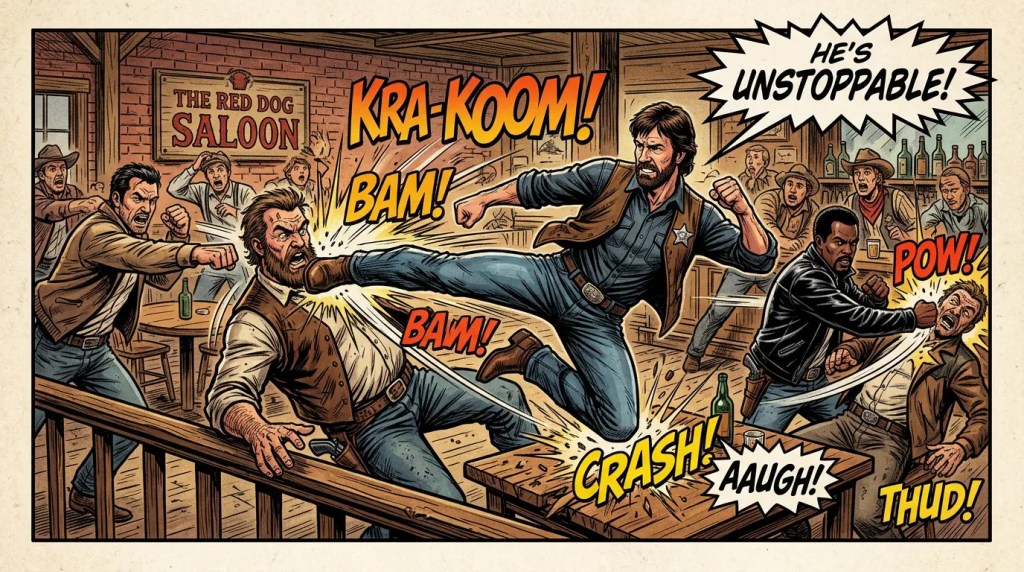
- Creators: Leslie Greif, Paul Haggis.
- Genre: Action, Crime, Drama.
- Where to watch: Mediaset Channels / Amazon Prime.
- Plot Structure: Episodic (Case of the week).
Let’s be honest: Sunday lunches or hot summer afternoons had one and only one flavor—the theme song “Eyes of a Ranger” sung by none other than Chuck Norris himself. Walker, Texas Ranger was the bastion of old-school justice on TV until 2001 (and remained in reruns for the next twenty years).
I still remember when I was 12 or 14 years old, being so entertained by this legendary series!
The plot was incredibly simple yet damn effective: Texas Ranger Cordell Walker, flanked by his trusty partner James Trivette, Assistant District Attorney Alex Cahill, and veteran C.D. Parker, solved crimes in Dallas.
No sophisticated CSI-style forensic investigations here; problems were solved with good old-fashioned car chases and, above all, Chuck Norris’s legendary roundhouse kicks. A series that preached ironclad moral values, patriotism, and redemption, becoming an immortal cult classic thanks also to the endless memes born on the web in the years that followed.
Not just the beard, but charismatic punches and kicks too
An icon of pure physicality: If Cordell Walker’s beard and icy stare became a symbol of authority burned into viewers’ minds, the true beating heart of the action lay in an unparalleled physical dynamism.
Chuck Norris didn’t need sophisticated stunt doubles or digital special effects to be believable: every punch and every move brought to the screen exuded the authentic charisma of a true multi-time world martial arts champion, capable of dominating the scene with his athletic presence alone.
The legendary roundhouse kick: The ultimate weapon against Dallas crime was, without a shadow of a doubt, the infamous roundhouse kick. More than a simple combat technique, that perfect move became the absolute trademark of the series, emphasized by epic editing and inevitable slow-motion replays.
It was the cathartic climax of every episode: viewers knew perfectly well that the exact moment Chuck lifted his leg 180 degrees, the sun was setting on whichever bad guy was in his way.
The choreography of the moral code: The crazy thing is that the fights in the show were never a display of gratuitous violence, but were staged as a true extension of justice. Chuck Norris managed to infuse his clashes with a rugged, fierce elegance, where every blow felt almost like a moral verdict.
His charismatic punches didn’t just break criminals’ defenses; they metaphorically cleaned up the streets, leaving an entire generation of kids wide-eyed, trying to imitate those legendary moves in the schoolyard.
Cordell and his allies
No lone hero, no matter how lethal, can clean up the streets of Texas alone. Behind Cordell Walker’s legendary successes was a true ironclad team. Here is a quick breakdown of his inseparable allies who helped him make justice triumph through punches and arrest warrants:
James “Jimmy” Trivette: Walker’s official partner and a former professional football player for the Dallas Cowboys (a career cut short by a bad injury). Trivette is the perfect modern counterweight to Cordell: while Walker relies on instinct, Native American traditions, and martial arts, Trivette firmly believes in forensic science, computers, and police databases. Despite their continuous banter, their chemistry is absolute, and Jimmy is the only one Walker blindly trusts when a shootout breaks out.
Alexandra “Alex” Cahill: The charming Assistant District Attorney for Dallas County, as well as Walker’s eternal love interest (and future wife). Alex represents the law and strict respect for constitutional rights, which often leads her to clash (at least in the early seasons) with Cordell’s decidedly quick and “on the edge” methods.
She is the legal mind of the group, the one who turns the criminals beaten by Walker into convicted inmates, though regularly landing in the crosshairs of the villains, forcing our Ranger into races against time to save her.
C.D. Parker: A retired veteran Texas Ranger who serves as a mentor, confidant, and second father to both Walker and Trivette. C.D. is the owner of “C.D.’s Bar & Grill,” the rustic joint where the team gathers at the end of the episode to drink beer and enjoy his legendary spicy chili.
With his inevitable irony, regulation cowboy hat, and old-school wisdom, C.D. frequently provides that crucial detail or old Texan anecdote capable of unlocking even the most intricate cases.
Sydney Cooke and Francis Gage: Introduced in the final seasons of the show to refresh the action and back up the veterans, they are the two “young” Rangers on the team.
Sydney is an expert in martial arts and undercover work (with a rebellious but lethal soul), while Gage is the classic impulsive, reckless, trigger-happy cop. Together, they perfectly replicate the same male/female and instinct/rules dynamic that made the Walker-Alex pairing famous.
Trivia and Behind the Scenes🎬
Nine seasons of roundhouse kicks, dusty car chases, and intense stares made Walker, Texas Ranger one of the irreplaceable pillars of ’90s and early 2000s television. But what went on behind Cordell Walker’s tin star? Here are the most incredible behind-the-scenes stories about the series that redefined the concept of TV justice.
The Theme Song Sung by Chuck Himself (Not Without Controversy)
Anyone who grew up during that era can perfectly belt out “In the eyes of a ranger, the unsuspecting stranger…”. The crazy thing is that the iconic country-rock track is sung by Chuck Norris himself!
Initially, the producers wanted a purely instrumental track or to hire a professional singer from Nashville. Chuck dug his heels in, demanding to lend his own voice to give the show an even more personal and rugged touch. A risky move that turned out to be a global success.
Honorary Ranger… in the Real World!
The cultural impact of the series in the state of Texas was so massive and positive for the police force’s image that reality ended up copying fiction. In 2010, Texas Governor Rick Perry officially conferred the title of Honorary Texas Rangers upon Chuck Norris and his brother Aaron (the show’s producer and director).
During the solemn ceremony, Chuck received a real official badge—an incredibly rare honor granted only to those who have shown immense support for the values and history of the Lone Star State.
The Birth of the Web Myth and “Conan’s Lever”
Have you ever wondered where the endless memes about “Chuck Norris Facts” (like “Chuck Norris doesn’t hunt, he goes killing”) came from? It all started thanks to the hyperbolic scenes in Walker, Texas Ranger.
In 2004, famous talk show host Conan O’Brien introduced the “Walker Texas Ranger Lever” to his sarcastic Late Night Show: a literal lever that, when pulled, played completely absurd, out-of-context clips from the series where Walker defeated bad guys in comically exaggerated ways. From there, the web literally exploded, transforming Chuck into the immortal and omnipotent being we all celebrate today.
The True “Co-Star”: The Indestructible Dodge Ram
If Walker was the arm of the law, his **silver Dodge Ram** pickup truck was without a doubt his favorite weapon. Cordell’s truck wasn’t just a simple means of transportation; it was a true character: it smashed through gates, survived explosions, jumped over dunes, and never got a single scratch on its bodywork.
This incredible product placement sent Dodge Ram sales skyrocketing in the early 2000s, turning the pickup into the ultimate object of desire for an entire generation of gearheads.
A Family Affair
Working on the set of Walker was, for all intents and purposes, a family reunion for the Norrises. In addition to his brother Aaron behind the camera, many of Chuck’s close relatives made appearances on the show.
His son, Mike Norris, played seven different characters over the seasons (usually extras or minor criminals destined to be knocked out by his father), while his other son, Eric Norris, worked steadily as the stunt coordinator, making sure every one of Papa Chuck’s roundhouse kicks looked visually perfect and safe.
A Global Phenomenon: When the Meme Becomes Global Culture
What started as a simple internet catchphrase quickly transformed into something massive: the “Chuck Norris Facts” became **worldwide knowledge**, a pillar of pop culture shared across every latitude of the planet. It doesn’t matter if you’re in Italy, the United States, Japan, or a tiny, remote village: everyone, from middle school kids to grandmothers, knows at least one joke about Chuck’s indestructibility.
It’s a crazy sociological phenomenon: even generations born long after the series ended, who have never seen a single episode of Walker, Texas Ranger on TV, know perfectly well that “Chuck Norris’s tears cure cancer, but too bad he has never cried.” The jokes have been translated into every language, printed on millions of t-shirts, cited in other movies, TV shows, and textbooks, elevating the actor from a mere television star to a true mythological deity of the digital age.
Unfortunately, Chuck Norris passed away on March 19, 2026, at the age of 86.
ᏦIᑕᏦ Oᑎ YOᕢᖇ ᕼᕔᗩᖇT 💥❤️
There is no chin under Chuck Norris’s beard. There is only another fist.
3. The Pretender (1996)
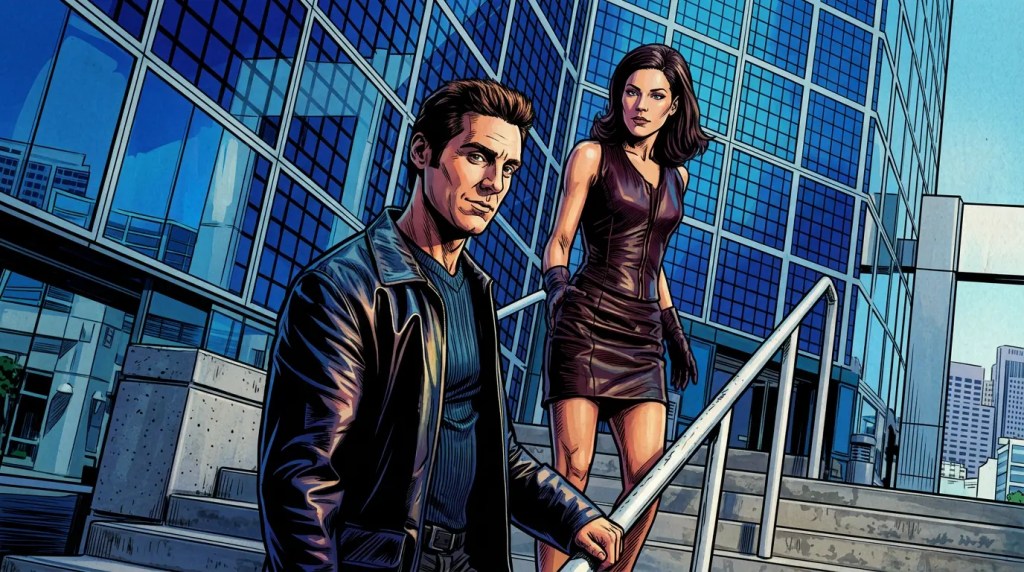
- Creators: Steven Long Mitchell, Craig W. Van Sickle.
- Genre: Mystery, Sci-Fi, Drama.
- Where to watch: Prime Video (availability varies) / Home Video.
- Plot Structure: Serialized and Episodic with a Case of the Week.
If there is one show that perfectly blended the thrill of an investigative mystery with a deep sense of melancholy and discovery, it is The Pretender (broadcast in Italy between 1998 and 2002).
Jarod (played masterfully by Michael T. Weiss) is a “Pretender”: a genius kidnapped as a child by a shady organization called “The Centre,” capable of psychically submersing himself into any human behavior, becoming a doctor, a pilot, a lawyer, or a bomb technician at a moment’s notice.
Having escaped from The Centre, Jarod travels the world assuming different identities to save innocents and search for his family, while the magnetic, cynical, and beautiful Miss Parker relentlessly hunts him down.
It’s one of the first thriller series I ever watched and can remember; it brought me both anxiety and curiosity at the same time.
The true gem of the series was the contrast between Jarod’s superhuman intellect and his complete child-like naivety toward the real world: memorable moments include him discovering everyday items for the first time, like PEZ dispensers, The Simpsons, Play-Doh, or ice cream, giving the audience a rare touch of poetry.
A Winning Blend
The narrative unfolds through an extraordinarily effective parallel-track formula, blending the procedural nature of the case of the week with a dense serialized plot. Each episode is built upon three fixed and perfectly balanced elements:
The episodic case (The genius serving the weak): Leveraging his ability to pretend to be in any profession, Jarod infiltrates a different environment every time. His goal is to avenge an injustice and trap a corrupt, powerful figure, using their own phobias against them before vanishing into thin air.
The “first time” gag (Stolen innocence): Having grown up in total isolation within the labs of The Centre, Jarod is unfamiliar with life’s simplest pleasures. In every episode, we see him take in small pieces of pop culture and everyday objects with the wonder of a child, creating a powerful empathetic bond with the audience.
The serialized plot (The manhunt and the mysteries of The Centre): While Jarod investigates his origins and searches for his real family, The Centre’s ruthless pursuit team moves close behind him (composed of the tormented Miss Parker, his mentor and psychiatrist Sydney, and the timid tech expert Broots), determined to capture him to regain control over his priceless simulations.
The Main Characters
The secret to the longevity and charm of The Pretender lies not only in the brilliance of the individual cases, but in the incredible psychological chemistry among its protagonists. Every single one of them is broken, tormented, and deeply intertwined with the mysteries of Blue Cove. Here are the unforgettable faces of the show:
Jarod (Michael T. Weiss): The Pretender on the run. An absolute genius with an off-the-charts IQ, capable of mastering any discipline in a matter of minutes. Even though his strategic mind is lethal to the corrupt, Jarod hides the vulnerable soul of a child whose life was stolen. His journey is a race against time to find his family and, at the same time, to experience all those small, everyday joys that The Centre denied him for thirty years.
Miss Parker (Andrea Parker): Cynical, magnetic, incredibly elegant, and lethal. The daughter of one of The Centre’s top executives, she grew up alongside Jarod in the labs. Armed with her trademark sarcasm, tailored suits, stiletto heels, and an iron aim, she leads the recovery team to capture him.
Yet behind her icy mask hides a woman shattered by grief: she hunts Jarod also because she knows he is the only one capable of uncovering the truth behind her mother Catherine’s dark “suicide.”
Sydney (Patrick Bauchau): The psychiatrist and scientist who raised and trained Jarod from childhood. Sydney represents one of the most complex and multi-faceted figures of the series: he is the man who took Jarod away from the real world on behalf of The Centre, yet he is also the only one who gave him any semblance of affection and human warmth.
Constantly torn between devastating guilt, his corporate obligation to capture him, and a deep-seated desire to see him finally free, Sydney serves as the (often shaken) moral compass of the entire manhunt.
Broots (Jon Gries): The brilliant yet perpetually terrified tech expert at The Centre. Recruited by Miss Parker to track the digital footprints, secure servers, and dead ends left by Jarod during his escapes, Broots serves as the perfect comic relief for the series.
He lives in a state of chronic anxiety, terrified of Miss Parker’s abrasive ways and threats from the higher-ups, but he hides a heart of gold, deep dedication as a single father, and an unexpected loyalty to his colleagues.
Mr. Raines (Richard Marcus): The true face of terror within The Centre. A ruthless, icy man devoid of any moral scruples, who moves sinisterly through the corridors dragging an oxygen tank.
Responsible for the most inhumane tortures and tests conducted on both Jarod and other experimental subjects, he constantly operates in the shadows for his own personal agendas, representing the most lethal threat to anyone attempting to bring the truth to light.
Trivia and Behind the Scenes🎬
Behind the scenes of one of the most beloved sci-fi/thriller series at the turn of the ’90s and 2000s lie secrets almost as fascinating as The Centre’s own dossiers. From real-life inspirations to unsolved mysteries on set, here is everything you need to know about The Pretender.
The Real “Pretender” Who Inspired the Series
The character of Jarod is not just a product of fantasy completely detached from reality. Creators Steven Long Mitchell and Craig W. Van Sickle were loosely inspired by the life of Ferdinand Waldo Demara, a real 20th-century man known worldwide as “The Great Impostor”.
Gifted with an extraordinary IQ and an impressive photographic memory, Demara successfully forged dozens of professions without ever having studied them: he served as a surgeon in the Royal Canadian Navy (even successfully performing emergency surgeries), a civil engineer, a lawyer, an assistant prison warden, and a Trappist monk. Just like Jarod, he didn’t do it for the money, but for the pure thrill of living a thousand different lives.
The Mystery of Miss Parker’s First Name
Did you ever notice? Throughout all four seasons of the series and the subsequent TV movies, Miss Parker’s first name is never revealed. To everyone—colleagues, enemies, and even her own father—she is simply “Miss Parker.”
This narrative choice was strictly maintained by the writers to heighten the character’s aura of detachment, coldness, and absolute institutional belonging to the Blue Cove organization. Even when Jarod teases her over the phone, he always uses her last name, leaving fans with an eternal question mark.
The Centre’s Fortress Really Exists (But It’s Not in Delaware)
The massive, gray, and eerie geometries of The Centre’s headquarters in Blue Cove, Delaware, became a symbol of the series. However, that building actually exists and is an Art Deco architectural masterpiece located in Toronto, Canada: the R. C. Harris Water Treatment Plant.
The structure is so striking, labyrinthine, and mysterious that cinema has utilized it numerous times; you can recognize it in cult films like John Carpenter’s In the Mouth of Madness or the series Flashpoint.
From Simple Extra to Show Pillar: The Case of Broots
The character of the anxious tech guy Broots, played by Jon Gries, was never intended to become a permanent member of the main cast. In the production’s original plans, Broots was meant to be a minor technician featured in just a handful of episodes to solve Miss Parker’s IT dilemmas.
However, the incredible comedic and acting chemistry that sparked on set between Jon Gries and Andrea Parker prompted the writers to rewrite his importance in the show, promoting him to a series regular and turning him into one of the most beloved and fiercely protected characters by the audience.
The Curse of the Unwritten Finale
Fans of Jarod know the bitter taste of incompleteness all too well. The series was abruptly canceled by NBC in 2000 at the end of its fourth season, leaving a massive cliffhanger (the train explosion).
Given the show’s success, the TNT network purchased the rights to produce four TV movies that were supposed to wrap up the story. However, only two were ever made in 2001 (The Pretender 2001 and The Pretender: Island of the Haunted), after which the project was mysteriously shelved due to budget constraints, leaving Jarod and Miss Parker’s story technically suspended forever.
ᏦIᑕKick Oᑎ YOᕢᖇ ᕼᕔᗩᖇT 💥❤️
“Jarod, don’t be scared, it’s just Mr. Raines… and you know how to vent his oxygen tank!”
2. Charmed (1998)
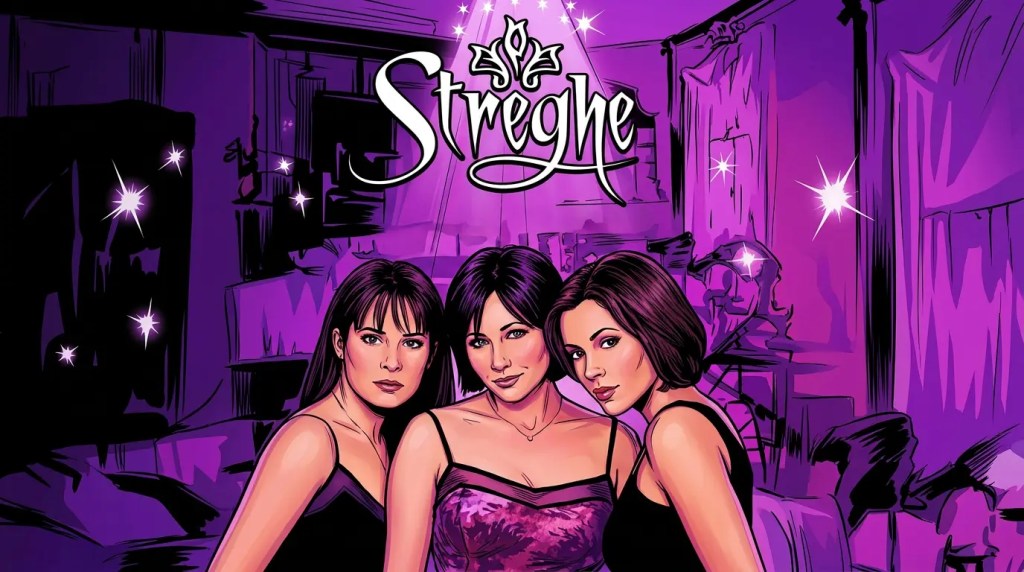
- Creator: Constance M. Burge.
- Genre: Fantasy, Comedy, Drama.
- Where to watch: Prime Video / Pluto TV.
- Plot Structure: Strong Serialized + Demon of the Week.
“The power of three will set us free!”. If you read that phrase with the right inflection, you are officially part of the club. The Halliwell sisters — Prue (Shannen Doherty), Piper (Holly Marie Combs), and Phoebe (Alyssa Milano), later joined by Paige (Rose McGowan) — redefined urban television fantasy in the early 2000s. There is a fierce debate over who is the fan favorite; personally, I’ve always noticed very different tastes among people.
Set in a San Francisco constantly threatened by demons, warlocks, and corrupt Elders, the series relied heavily on the unbreakable bond of sisterhood. The Book of Shadows, magic potions brewed in the kitchen of the gorgeous Victorian manor, and tormented love affairs (like the impossible romance between Phoebe and the demon Cole Turner) made Charmed an essential daily appointment.
One of the first fantasy series centered on women and their daily lives
A revolutionary fantasy: Long before television schedules were flooded with heroines of all kinds, Charmed broke the mold by bringing a female-centric urban fantasy to the small screen.
Magic wasn’t just a visual gimmick for show, but a metaphor for the strength, resilience, and independence of three women left alone to handle a massive legacy, capable of making their way in a world (both human and demonic) dominated by often oppressive male figures.
Between spells and real life: The show’s true strength lay in the perfect balance between the supernatural and the most mundane yet complex daily life. The Halliwell sisters didn’t just spend their days saving the world; they had to pay bills, handle workplace drama, pass job interviews, and make their romantic relationships work.
Seeing Piper try to figure out how to manage suppliers for her club (P3) or Phoebe dealing with her newspaper advice column while a demon was trying to destroy their home created an incredible level of relatability for the audience.
The Magical Main Cast
Prue Halliwell (Shannen Doherty): The eldest sister—proud, determined, and gifted with the power of telekinesis (and later, astral projection). Prue embodies duty and sacrifice: she gave up much of her youth to act as a mother to her younger sisters after their mother’s death. Her iron leadership and impeccable style made her one of the historic pillars of the show, leaving an irreplaceable void for fans after her tragic departure at the end of the third season.
Piper Halliwell (Holly Marie Combs): The true beating heart and moral compass of the family. Initially shy and constantly caught in the middle of arguments between Prue and Phoebe, Piper grows to become the most powerful and mature witch of the Trio, capable first of freezing time and later of molecular combustion.
Her long, tormented love story with Whitelighter Leo Wyatt redefined the concept of the “impossible relationship” on TV, delivering the most emotional and moving moments of the entire series.
Phoebe Halliwell (Alyssa Milano): The most rebellious, unpredictable, and empathetic of the three. Initially lacking offensive powers (relying only on premonitions and levitation), Phoebe compensates by studying martial arts and becoming the strategic mind behind writing new spells.
Her character is tied to the darkest and most beloved subplot of all time: the sweeping, toxic, and devastating passion for Cole Turner (Balthazar), which would even lead her to briefly become the Queen of the Underworld.
Paige Matthews (Rose McGowan): The breath of fresh air that saved the Power of Three. Introduced in the fourth season after Prue’s death, she is revealed to be the secret half-sister born from the clandestine union between their mother Patty and her Whitelighter.
Paige brings a completely new dynamic to the show: independent, stubborn, and raised as an only child, she has to learn from scratch how to be a team player, bringing unique powers derived from her hybrid nature, such as telekinetic orbing.
Cole Turner (Julian McMahon): The ultimate anti-hero: Let’s admit it, us guys were rooting for this anti-hero, the most beloved “bad boy” of 2000s television. Introduced as a charming district attorney, Cole actually hides a ruthless demonic nature: he is Balthazar, a killer sent to destroy the Halliwells.
His destiny is sealed when he falls madly in love with Phoebe, triggering a heartbreaking struggle between his human side and his dark half. A tragic and magnetic character who would go from being an ally of the Trio to becoming the Source of All Evil itself, giving the series its most mature and gripping storyline.
Trivia and Behind the Scenes🎬
The Phoebe You Never Saw
In the original pilot of the series, filmed to convince the network to greenlight the show, the role of Phoebe wasn’t played by Alyssa Milano. The youngest sister was initially portrayed by actress Lori Rom. After the production received its definitive go-ahead, Rom decided to leave the project for personal reasons.
The role was recast in a hurry with Milano, and all of her scenes for the first episode were completely reshot from scratch, altering the destiny of the series forever.
The Obsession with the Letter P
An iconic detail that united all generations of witches in the Halliwell house is the strict naming rule. Besides Prue, Piper, and Phoebe, even their mother (Patty) and grandmother (Penny) followed this tradition.
When Rose McGowan was brought in to replace Shannen Doherty, the writers had to find a clever, consistent way to avoid breaking the tradition while managing the change in last name, which ultimately gave birth to the name Paige.
A Record-Breaking Book of Shadows
The legendary magic tome kept in the manor’s attic wasn’t just a simple lightweight plastic prop. The book was a true masterpiece of craftsmanship: entirely bound in real leather, it featured hundreds of pages hand-illustrated by a specialized artist.
Due to the real materials used and the continuous additions made over the seasons, the book grew to weigh nearly 11 pounds (5 kg), forcing the actresses into genuine physical strain every time they had to flip through it in a hurry.
Backstage Tensions and Feuds
While on-screen the chemistry between the Halliwell sisters seemed seamless and unbreakable, the atmosphere behind the scenes during the third season was literally on fire.
The sharp personality clashes and heated arguments on set between Shannen Doherty and Alyssa Milano became so unsustainable that they pushed production to make a drastic decision: write off Prue’s character in the season three finale to ensure the smooth continuation of the show.
The Brave and Tormented Life of Shannen Doherty
Behind the charisma and immense talent of Shannen Doherty lay a private life marked by massive battles. Often unfairly labeled by 1990s and 2000s media as a “difficult” or rebellious figure due to her strong, independent, and unfiltered character, Shannen faced enormous challenges from a young age, living first with Crohn’s disease and later enduring a brutal battle against breast cancer diagnosed in 2015.
With extraordinary dignity and strength, the unforgettable actress who brought Prue to life chose to share her journey and daily life publicly and without taboos, becoming a massive symbol of resilience for millions of people worldwide until her painful and untimely passing in July 2024. A true warrior, both in front of the camera and in real life.
ᏦIᑕᏦ Oᑎ YOᕢᖇ ᕼᕔᗩᖇT 💥❤️
Never piss off a pregnant woman… you might explode.
1. Buffy the Vampire Slayer
- Creator: Joss Whedon.
- Genre: Horror, Fantasy, Drama, Comedy.
- Where to watch: Disney+.
- Plot Structure: Serialized (The saga of the seasonal Big Bad).
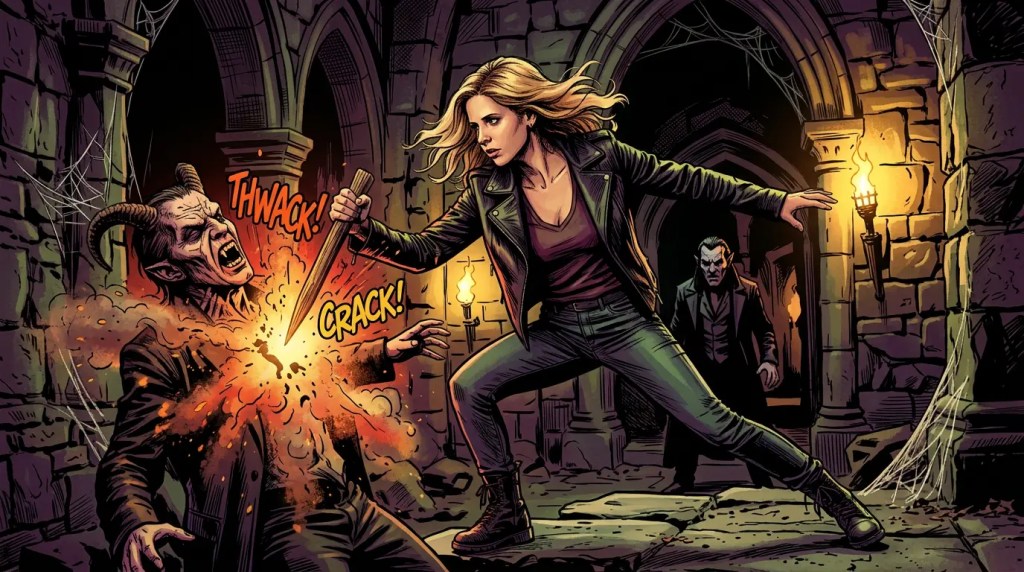
There could only be one show taking the top spot on the podium. Buffy the Vampire Slayer wasn’t just a TV show; it was a genuine cultural phenomenon of academic proportions (there are literally “Buffy Studies” in American universities). Airing until 2003, the series subverted the cliché of the helpless blonde in horror movies, transforming Sarah Michelle Gellar into the most powerful feminist icon of the era.
Set against the backdrop of the town of Sunnydale, built right on top of a monumental “Hellmouth,” Buffy fought vampires and demons alongside her Scooby Gang (the librarian-Watcher Giles, and her friends Xander, Willow, and Cordelia).
Joss Whedon’s true genius lay in using the monsters of the week as brilliant visual metaphors to convey the real horrors of adolescence and growing up: inadequacy, isolation, and the pain of loss (the episode “The Body,” centered on the death of her mother, is still studied today for its raw and silent perfection).
From the artistic peaks of the silent episode “Hush” to the musical masterpiece “Once More, with Feeling,” Buffy enchanted an entire generation, proving that fantasy could have a profound, courageous, and painfully human writing style.
Entertainment and Teenage Struggles
Monsters as real-life metaphors: The greatness of Buffy lies in understanding that real monsters don’t live under the bed, but in high school hallways. The “Hellmouth” beneath Sunnydale wasn’t just a supernatural plot device, but the physical representation of those complex years. The perfect boyfriend who transforms into a ruthless monster after the first night of intimacy (Angelus), the friend who becomes invisible because she is ignored by everyone, or the bullies who act like packs of ravenous hyenas: every demon faced by the Scooby Gang was a literal translation of a collective teenage trauma.
The burden of growing up: As the show transitioned to college and adulthood, it managed to evolve without losing a shred of consistency. Problems tied to homework and prom gave way to the true dramas of maturity: clinical depression, financial struggles, managing a household, substance addiction (metaphorized through the abuse of dark magic), and the devastating shock of losing a parent to tragically natural causes. Buffy taught us that being “the Chosen One” doesn’t exempt you from having to pay bills or suffering from a broken heart.
The Protagonists in Sunnydale
Buffy Summers (Sarah Michelle Gellar): The Unconventional Chosen One: Destined to fight the forces of evil alone, Buffy subverts every rule of her centuries-old lineage by rejecting isolation. She is a complex heroine, torn between a deep desire for a normal, ordinary girl’s life and the immense weight of her biological calling. Armed with wooden stakes, lightning-fast sarcastic one-liners, and an unwavering strength of will, she faces her destiny while accepting the emotional scars that come with it.
Rupert Giles (Anthony Head): The Mentor and Father Figure: Buffy’s official Watcher, sent from England to train and guide her. Hidden behind his signature tweed suit, eyeglasses, and a cup of tea, Giles rapidly evolves from a rigid Council bureaucrat into a genuine father figure for the girl. Beneath his cultured, British exterior, however, lies a dark and rebellious past from his youth, which resurfaces whenever he needs to get his hands dirty to protect his protégée.
Willow Rosenberg (Alyson Hannigan): From Shyness to Dark Magic: The character who undergoes the most massive evolution of the entire series. Initially introduced as the classic school “nerd”—shy, insecure, and a constant victim of bullying—Willow eventually discovers an innate talent for the magical arts. This growth leads her to become one of the most powerful witches on earth, but it also exposes her to terrifyingly dark abysses, culminating in a grief-fueled, destructive quest for vengeance that temporarily transforms her into the show’s most dangerous villain.
Xander Harris (Nicholas Brendon): The Human Soul of the Group: The only true member of the “Scooby Gang” without any magical powers, super strength, or special training. Xander represents the audience on the ground: he is the loyal friend who compensates for his lack of special abilities with immense courage, a self-deprecating wit, and total devotion to Buffy. Often underestimated, he is the one who sees everything clearly and, on more than one occasion, manages to save the day using simply the power of empathy and words.
Cordelia Chase (Charisma Carpenter): From Superficiality to Sharp Loyalty: Initially the quintessential superficial, snobby high school queen bee who is ruthless to anyone unpopular, Cordelia goes on an incredible journey of personal growth. Despite desperately trying to stay out of supernatural trouble to safeguard her social life (and her designer clothes), she always ends up swept up in Sunnydale’s threats, becoming a core member of the Scooby Gang and striking up a memorable, tumultuous relationship with Xander.
Her best quality? A brutal, completely unfiltered honesty: Cordelia always tells the truth to everyone’s face, even when it hurts terribly, bringing a breath of healthy realism and biting sarcasm into the middle of the group’s mystical dramas.
Spike (James Marsters) and Angel (David Boreanaz): Vampires of the Soul: The two sides of Buffy’s dark and romantic coin. On one hand, Angel, the tormented vampire with a cursed soul, the embodiment of a tragic and impossible first love; on the other hand, Spike, the punk-rock, anarchic, and lethal predator who falls so deeply in love with the Slayer that he undergoes a hellish journey just to win back his soul to be worthy of her. Two magnetic anti-heroes who split fans into historic, fiery factions.
Trivia and Behind the Scenes🎬
Behind the creation of the “Slayer-verse” lie absurd anecdotes, last-second bets that paid off, and casting choices that could have completely changed the history of television. Here are the juiciest secrets from the backstage of Sunnydale:
The Role Swapping Between Buffy and Cordelia
Today it’s impossible to imagine anyone else in the Slayer’s shoes, but initially, Sarah Michelle Gellar auditioned to play the snobbish Cordelia Chase. Parallel to that, Charisma Carpenter (and even Katie Holmes!) auditioned for the role of Buffy. Recognizing Gellar’s fighter spirit and vulnerability, the producers asked her to come back for the lead role, reassignment the part of the high school queen bee to Carpenter. A perfect double bullseye.
Born from the Ashes of a Flop
Not everyone remembers that the TV series is actually a sequel/reboot of a 1992 feature film titled Buffy the Vampire Slayer (starring Kristy Swanson and Luke Perry). That movie was a bit of a commercial disaster and was heavily altered by the studio, which turned Joss Whedon’s feminist horror concept into a silly comedy. Disappointed by the result, Whedon decided to reclaim his original concept years later, bringing it to the small screen and achieving his resounding vindication.
The (Winning) Bet on Spike
The platinum-blond Spike, played by James Marsters, was originally conceived by the writers as a “disposable” villain. In the original plans, he was meant to be brutally killed after just a couple of episodes to demonstrate the lethality of other villains. However, Marsters’ incredible punk-rock charisma and the fans’ immediate obsession with his character forced Whedon to change plans on the fly, turning him first into a series regular and later into a cornerstone of the final seasons. Fun fact: Marsters is Californian and had to work hard to pull off that perfect British accent!
The Silent Answer to Critics
The extraordinary season four episode “Hush,” in which the monstrous “Gentlemen” steal the entire town’s voices, was born out of a direct provocation. TV critics at the time kept repeating that the show’s success relied solely on its fast-paced dialogue and the kids’ pop-culture quips. To prove them wrong, Whedon wrote an entire episode featuring a whopping 27 minutes of total silence, relying exclusively on facial expressions, the musical score, and visual storytelling. The result? An Emmy nomination and one of the scariest episodes in television history.
Nicholas Brendon’s Off-Screen Struggles
While on screen Xander Harris represented the human and witty moral compass of the Scooby Gang, the real life of his actor, Nicholas Brendon, was unfortunately plagued by severe personal “demons.”
Over the years, the actor has faced a brutal and public battle against depression, alcoholism, and substance abuse, which led to repeated run-ins with the law, arrests, and long stints in various rehab facilities. These deep personal turbulences inevitably affected and slowed down his career after the show ended, but Brendon, with great vulnerability, has often chosen to speak openly about his frailties at fan conventions in an effort to raise awareness about mental health and addiction.
A Slayer in Real Life Too
Sarah Michelle Gellar didn’t just lend her face to the character; she truly possessed the physical skills to take down vampires. The actress is actually a black belt in Taekwondo and spent a long time studying kickboxing, boxing, and gymnastics. Thanks to this exceptional martial arts background, Gellar personally performed the vast majority of the choreography and complex fight scenes on set, keeping stunt double interventions to a minimum (reserved only for the most dangerous stunts) and bringing an incredible authenticity and physical power to the screen.
Social Commitment and Activism
Sarah Michelle Gellar’s impact went far beyond television feminism, turning her into a true global symbol in the world of philanthropy. Away from the cameras, the actress has dedicated much of her life to activism, actively working on the ground with organizations like Habitat for Humanity (physically building homes for the underprivileged in developing nations), CARE for female empowerment and the fight against global poverty, and numerous medical research foundations. A clear demonstration of how to use fame to do concrete good.
ᏦIᑕᏦ Oᑎ YOᕢᖇ ᕼᕔᗩᖇT 💥❤️
“If your boyfriend loses his soul after your first night together, don’t call a psychologist… call Giles and prep a wooden stake!”
In Conclusion
These five television gems(5 tv series!) prove how the transition into the new millennium redefined our pop imagination, creating immortal cult classics that stand the test of time.
And which of these shows did you religiously watch right after homework or after dinner?
If you’re looking for more recommendations, feel free to check out our list of 5 TV series from the recent past worth watching.

Leave a Reply